Friday, December 3, 2010

YIPPIEEEEEEE!!!! =D


I'm FINALLY done with the research project! Since I'm planning on presenting in the spring’s Research Symposium, I want to further  my research, because after spending so much time doing this study, I realized how I can improve my survey and interview questions.  Now, I know EXACTLY what to do in order to get significant differences, meaning that there are positive correlations in my findings, regarding the development of resilience in college-athletes.  Additionally, it would have been GREAT if I would’ve conducted interviews in other universities, such as Nova Southeastern University, Barry, and Florida International University.  I’m INSPIRED!  Since I’m part of the Research Interest Group, I will be mentored by Dr. Pickens, a psychology professor at STU, who’s currently doing research in the Miami Gardens community.  Therefore, he’s willing to help me with my research and will guide me through the survey and interview questions.
I learned so much in my Multimodal Research & Writing Course!  Just because the class has come to an end, it doesn’t necessarily mean my blogging will, as well.  I’ll keep you guys updated on additional research studies I will be conducting during the spring semester, along with several other STU students.  We are actually thinking about doing animal behavior, which is Psychology of Learning.  We will be visiting Miami Seaquarium quite often, doing an observational study to understand how marine animals (i.e. dolphins, whales, seals, etc.) are trained using positive and negative reinforcements, operant conditioning, etc.  If you are interested in doing research, please let me know J

Blessings,

ENLIGHTEN7

Monday, November 22, 2010

REVISED :)

After all, I’m really happy about the topic I chose for my semester-long research.  It has actually changed my approach to challenging situations in a more positive way.  In fact, I use to avoid challenges rather than seek them, and after all my findings and readings, I’ve realized the importance of obstacles.  The only way to become stronger, whether it’s physically, emotionally, or psychologically is being challenged- it’s that simple.  As bad as it sounds, it’s good to get heartbroken (emotionally challenged) a few times because it prepares you for what is yet to come.  You should be grateful for intense practices because if you can get through them, you know you have accomplished something and you are continuously becoming physically and psychologically stronger.  Your mind and body might tell you to quit, but your heart tells you to keep going.  Countless of people complain about teachers who assign group projects, because there will always be that ONE person who screws everything up.  To make matters worse, some professors will deduct points off your overall grade if you decide to change to a different group.  So, what should you do…drop the class? Of course, not!  It will benefit you in the future.  Foremost, you’ll learn how to deal with people who are irresponsible, annoying, disrespectful, and so on.  When you start your career, the odds of having a LOVELY boss are very low.  So what should you do…quit? Of course, not!  You should get the best out of it by taking a different approach and having a positive view.  Every time you’re confronted with negative people, just remember that it’ll help you grow as a person; it will build your character! =) So, if you’re wondering how resilience is linked with challenges, resilience is merely developed through adversities! Seek them, appreciate them, and learn from them. Build your resilience because life isn’t easy, but it’s worth living!

Whatever it takes... :)

           After all, I’m really happy about the topic I chose for my semester-long research.  It’s actually changed my approach to challenging situations in a more positive way.  In fact, I use to avoid challenges rather than seek them, and after all my findings and readings, I’ve realized the importance of obstacles.  The only way to become stronger, whether it’s physically, emotionally, or psychologically is being challenged- it’s that simple.  As bad as it sounds, it’s good to get heartbroken (emotionally challenged) a few times because it prepare you for what is yet to come.  You should be grateful for intense practices because if you can get through it, you know you have accomplished something and you are continuously becoming physically and psychologically stronger.  Your mind and body might tell you to quit, but your heart tells you to keep going.  Countless of people complain about teachers who assign group projects, because there will always be that ONE person who screws everything up.  To make matters worse, some professors will deduct points of you decide to change to a different group.  So, what should you do…drop the class? Of course, not!  It will benefit you in the future.  Foremost, you’ll learn how to deal with people who are irresponsible, annoying, disrespectful, and so on.  When you start your career, the odds of having a LOVELY boss are very low.  So what should you do…quit? Of course, not!  You should get the best out of it by seeing it from a different perspective.  Every time you’re confronted with negative people, just remember that it’ll help you grow as a person; it will build your character! =) So, if you’re wondering how resilience is linked with challenges, resilience is merely developed through adversities! Seek them, appreciate them, and learn from them. Build your resilience because life isn’t easy, but it’s worth living!
                                        
                                   
“Come on! Keeping going…Don’t give up!”
God bless you =)
Enlighten7

Tuesday, November 16, 2010

Finally... =)

Hello everyone,
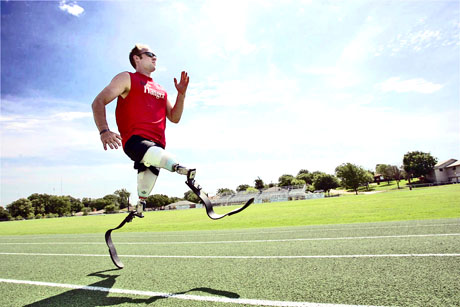
Hope everyone is doing great! =) My project is gradually coming to an end…not a complete end, but a DEADLINE!  I feel like I learned A LOT from it, although I wish I had more time to get in-depth, but it’s definitely something I’m looking forward to for a further analysis in the future.  I finally completed my interviews, and observations.  I have to admit, I’m a little disappointed that the MAJORITY of my surveyors were female athletes, but I got a good number to work with- 31 respondents.  At first, most people informed me that they refused to take the survey because they thought it was a SPAM.  After posting it MANY time, continuously, they finally got the picture that it wasn’t a SPAM.  My project not only answered many of my questions, but it also revealed many techniques that help with reducing stress and simply taking every obstacle as a challenge, rather than a threat.  Resiliency is something that can be obtained, but it’s the person’s decision whether they want to be resilient or not.  Whenever you’re put in a very difficult decision and you feel like quitting, just remember to KEEP GOING.  If you are defeated, try AGAIN; setbacks are there for a reason- to help you grow.  Interestingly, resiliency is built through challenges, which is something MANY people avoid.  Athletes, on the other hand, or competitive athletes (I should say), love and seek challenges.  Psycho-education also helps you build resilience because you become aware of the stressors and you learn to control your reactions in a more positive way.  It allows you to reflect rather than impulsively react to an unfavorable situation.  A piece of advice: NEVER get too comfortable where you are; always strive to become stronger psychologically, emotionally, and physically!
               

You see that guy above?  He could’ve easily given up when his legs were amputated, but he decided to go a little further!  He knew he’d be comfortable remaining in a wheelchair for the rest of his life, but he strived through the challenges and now he's stronger than ever!
Blessings!!!!!! =)
Enlighten7

Thursday, November 11, 2010

Athlete's Competitive NATURE =)

As you may all know, my research has been changed to, “How do Athlete’s Develop Resilience?”  With that being said, I decided to create a multimodal that will present the mind of an athlete, which is distinct from non-athletes.  You see, athletes acquire a competitive nature, a desire to triumph over their opponent, whether it’s a person, a situation, or a mental challenge.  They are willing to go the extra mile and get dirty, whatever it takes to win.  When an athlete is being threatened by fear, doubts, anxiety, pressures, and so on, they tend to attack those feelings the same way they attack their opponent in their sport.   In other words, athletes attack life challenges the same way they attack their opposing team.  Sometimes, athletes will allow their “opponents” (e.g., setbacks, doubts, pressures, criticism, etc) to control their life.  Other times, they will do whatever it takes to win the battle. 
 As you may all know, my research has been changed to, “How do Athlete’s Develop Resilience?”  With that being said, I decided to create a multimodal that will present the mind of an athlete, which is distinct from non-athletes.  You see, athletes acquire a competitive nature, a desire to triumph over their opponent, whether it’s a person, a situation, or a mental challenge.  They are willing to go the extra mile and get dirty, whatever it takes to win.  When an athlete is being threatened by fear, doubts, anxiety, pressures, and so on, they tend to attack those feelings the same way they attack their opponent in their sport.   In other words, athletes attack life challenges the same way they attack their opposing team.  Sometimes, athletes will allow their “opponents” (e.g., setbacks, doubts, pressures, criticism, etc) to control their life.  Other times, they will do whatever it takes to win the battle. 

The End :)

Be back soon! :)

Blessings!!!!!!!

Enlighten7

Thursday, November 4, 2010

SURVEY ANALYSIS :)

Hello everyone, :)

I'm super excited because more students are completing my survey, after posting it 1,00000000000000000000 times on Facebook!  As you may know, you can analyze individual survey by clicking "Browe Survey" on Surveymonkey, and I've noticed a pattern.  Nearly ALL athletes struggle with balancing school and their sport, which was described as their most difficult challenge to endure.  However, social support varies by sport.  Basketball players agree to have a supportive team and coach.  One of the players emphasized on how their coach supports academics by giving GPA awards in the Athletic Award Ceremony, while other coaches simply emphasize on athletic performance.  I will be leaving to South Carolina tomorrow morning with the cross country team, and I will definitely OBSERVE their behavior.  Without a doubt, we are a very UNIQUE team :), in a good way.  Despite our differences, we got along pretty well...sometimes.
I'm off to practice :)

BLESSINGS! =)

ENLIGHTEN7

Sunday, October 31, 2010

Is it Spirituality or Religion? :)

                I’m getting more and more in depth in my research! J It’s exciting because I feel like it’s going somewhere, and I’m getting productive feedback from others.  I found an article entitled, “Spiritual Well-Being and its Influence on Athletic Coping Profiles”, which reveals the positive outcome of spirituality in NCAA Division I athletes.  The authors, Heather Ridnour and Jon Hammermeister, found that “athletes who scored higher in spiritual well-being also displayed a better athletic coping skills profile for sport performance.”  In this study, spirituality does not necessarily mean a belief in One God or many gods, but a strong connection with others.  Spirituality is what links mental and physical health together, making it a vital component for not only athletes, but all human race.  The researchers made a great point in their study: “The terms religion and spirituality are often confused and misrepresented” (82).  Religion can easily be corrupted because it divides people; it’s a tradition and if certain rules are broken, separation may occur.  Spirituality, on the other hand, is having an intimate relationship with God (from a Christian perspective).  The same way you spend time with a friend to get to know them better, you spend time with God in prayer.  The same way your friends text, calls, or emails you, God does the same through His Word- the Bible.  In my research, my objective is to understand the impact of spirituality, not religion.  The belief in a high power may reduce anxiety in many ways, increasing the confidence in athletic performance.  To be continued... :)
BLESSINGS =)
-Enlighten7

Thursday, October 21, 2010

Taking it ONE day at a time... :)

The work-shops are AWESOME!!! I finally feel like I'm progressing! 

As you may know, my research is revolving around Alonzo Mourning's (former Miami Heat Basketball player) book, Resilience.  His life reveals the most important aspects that influence the development of resilience: focus, perseverance, determination, courage, social support, and faith.  My first multimodal will focus on three STU sports, including one of the meetings of the Break Thru Club, which consist of a social support group for athletes.
If you're wondering how Alonzo describes resilience, visit:
  http://www.youtube.com/watch?v=x-uUgy7a__Q

From my own interactions with other athletes, I've realized their common approach to unfavorable situations; they often view them as challenges, not threats.  Mourning mentions, "It's amazing how adversity introduces a man to himself; you go through different trials and tribulations in your life, and it helps you stop and reflect, and understand your purpose here and not once did I give up...I could have easily given up."  That's simply amazing.

Anyways, before I actually begin filming for my multimodal, I MUST begin my observation, in order to determine what sports event will give the audience a better understanding of what I'm trying to portray.  I want to show athletes struggling and persevering in their sport and studies, team/coach support, and what it's like to be an athlete.  My first interviewee made an interesting statement, "College athletes, in general, are more resilient than non-athletes...athletes run a risk of having a major setback and then having the decision, 'should I fight back or quit?'"  That is something that sets athletes apart from non-athletes. 

Blessings,

ENLIGHTEN 7

=)

Thursday, October 14, 2010

Themed Road Trips Reveals TEAM UNITY :)

  I officially completed my FIRST interview! =) What a relief! It went great!!!!!!!!!!!!!!!  My interviewee provided so many great ideas that will help me TREMENDOUSLY!  So, thanks to my professor, I narrowed my research topic: “How do athletes develop resilience?”  I realized that my interviewee continuously mentioned the importance of social support for athlete’s (and non-athletes).  He provided a few examples, including the Tampa Bay Rays (MLB) team, coached by Joe Maddon, who CLEARY encourages team unity.  The team goes on themed road trips, where they ALL dress exactly the same.  You know, the higher you get in athletics (e.g., NFL, MLB, NBA, etc.) the less fun it becomes.  The idea of doing theme road trips just makes the game a little bit more interesting. J

The picture above is the Tampa Bay Rays dressed in “BRaysers” (Blazer jackets).  Events like these actually build team relationship, which is important for professional athletes, especially. 
I will divide my research into different sections, one of them being SOCIAL SUPPORT.  My interviewee also requested a website (a charity organization located in Miami) about Alonzo Mourning’s book, Resilience, which is my research foundation/framework.  There, I may be able to conduct an interview regarding his book, which will definitely enhance my research and provide MORE & MORE answers...and QUESTIONS!!!!!
Blessings,
ENLIGHTEN7

=)

Friday, October 8, 2010

Athlete's FAITH :)

Ephesians 2:8-19: "For it is by grace you have been saved, through faith- and this not from yourselves, it is the gift from God- not by works, so that no one can boast."
“What if we choose to believe in God’s promises?”  This simple question changed my perspective FOREVER!  It led to one simple statement, “Let go & let God.”  So, I went to church on Wednesday and was able to apply the Pastor’s teaching to my project.  Because I wanted to use Christian faith for my framework, I’m using The Athlete’s Bible to enhance my research.  It’s amazing how many scriptures can be portrayed from a competitive viewpoint, depending who is reading the verse and what they are presently experiencing.  The book of Corinthians states, “No, I beat my body and make it my slave so that after I have preached to others, I myself will not be disqualified for the prize.”  As an athlete, we are continuously being challenged and sometimes want to quit because of physical pain.  However, we must not become slaves to our body, and not allow our pain affect our performance but let the body become your slave, enduring through the pain.  Another verse that applies to athletes, “Do you not know that in a race all the runners run, but only one gets the prize?  Run in such a way as to get the prize” (1 Corinthians 9:24). 
            As I mentioned in my Research Proposal, Why is it that life, which is vital and precious for most, is inferred as the “race of faith” in the Bible?  How can a person who has never experienced a competitive situation in a race (or other sports) understand Paul’s interpretation of life?  These questions lead me to another question, “Where does resilience truly come from?”  Remember, resilience is the ability to bounce back or recover successfully from an adversary.  According to Alonzo Mourning, resilience comes from faith; surrendering your troubles, worries, doubts, challenges and helpless moments to God.  Not everybody puts their hope in God, so who or what do they put their faith in and how does it affect their performance?   I’m pretty sure many individuals have witnessed an athletic event where a ‘non-religious person’ (whatever that means), acts upon a religious ritual out of suspicion or hope from God for a better outcome.  For example, some baseball/softball players will do the holy trinity symbol before going up to bat.
I haven’t really focused in non-athletes! As I was reading The Athlete’s Bible, I realized many characteristics that athletes posses, which are vital for a peaceful and triumphant life, even for those who aren’t athletes.  The writer mentioned, “Competition is a great thing.  It moves people beyond mediocrity to greatness.”  The great thing about being an athlete is the consistency of challenges; however, not every athlete lives up to those challenges but simply become content or back down.  Competition makes you work harder and helps you become better in what you do.  Whether it is writing an essay or running a race, competition is what makes you or breaks you.  It’s vital for non-athletes to put themselves in competitive situations to learn how to persevere.  This life is filled with challenges so people must be able to grasp resiliency, and that is what my research WILL provide- how resilience can be obtained!
Have a blessed day! :)
-Enlighten 7

Thursday, September 30, 2010

Truly analyzing... :)

Hello everyone!!!!!

I hope everyone is doing great!  My classmate and I were assigned to make observations in the cafeteria.  I actually noticed certain behaviors I probably would have never realized if I didn't become critical and truly analyze my surroundings.  The cafeteria is usually a place to eat (of course), socialize, and for most college students (including myself), it's the only "break" they get.  The walls of the cafe are a light and medium colored green, with a lot of lighting coming from the windows.  When I walked in, there were a few students and it was very quiet.  Most of the students who were present were eating by themselves.  Interestingly, I realized that those who were etaing alone were listening to their ipod, watching music videos on the screen, looking through their phones, and eating slower than those who were socializing.  There were two soccer guys who were talking really loud, of course :) The two basketball players who were present as well, hung out in the cafeteria, watching everyone who walked in, after they finished their meals.  With the presence of the cafeteria director, the employees were very active and doing a job well done, and being very attentive to the students.  One of the chefs who was doing his rice specialty would offer every student with excitement.  I couldn't say no! Around 12p.m. (on the dot) so many students started walking into the cafeteria, and it continued to get louder and louder.  I noticed that ALL the athletes eat with their teammates, which I thought was nice.  The most subtle situations I caught was someone dropping food on the way to the trays and not cleaning after themselves.  Those who were eating alone were more likely to rush through their meals.  Others continued to socialize, even after they completed their meal.
That's all for now :)

Blessings,

Enlighten7

Saturday, September 25, 2010

What a LONG day.. :)

Hello everyone,

I finally completed my Annotated Bibliography! Woohoo! Anyways, I thought it was a great assignment because it allowed me to get deeper into the studies conducted, and really analyze the data analysis.  This research is amazing because I can actually apply this to my future career- Sports Psychology.  Many of the authors who conducted these studies are involved in Sports and Exercise Psychology, giving me an understanding on how they approach the athletic world and their ways of viewing certain characteristics.  I learned that resilience is a learned behavior and can be obtained through eduactional courses or sessions.  Why don't they offer these type of classes in high school?!!! I had to experience a nervous breakdown, and then when I finally got through it, it was a very long process to learn how to cope with stress, and use it as a motivatinal tool rather than a threat.  Even family interaction and support can influence resiliency because it gives the person a sense of support; he/she is not going through a tribulation alone.  My next step is to interview some of the coaches.  I have to come up with the best questions to get the most out of it to enhance my research! Be back soon!

Blessings :),

Enlighten7 

Wednesday, September 22, 2010

On my way to California :)

Hello again,

Hope everyone is doing great!  I just got back from San Diego, California, and it was absolutely AMAZING! The people, the weather, the food and the city were indescribable J Anyways, during my flight, I read an article entitled, “The Associations among Social Support, Stress, and Life Satisfaction as Perceived by Injured College Athletes”, and new questions and ideas arose.  I want to know whether some sports (according to their exercise intensity) have a greater impact on resilience compared to other sports.  In other words, if the women’s basketball coach promotes a challenging practice every day (e.g. higher intensity, such as more sprinting, more strengthening drills, etc.), will it have a positive outcome by preparing the women’s basketball team for greater life challenges they will face in the future?  Golf, on the other hand, involves less exercise intensity, so will it affect their resilience level?  I will definitely interview all the coaches at St. Thomas University and ask them to provide a description of a typical day of practice.  With surveys and a few observations, I might have a better understanding on the impact sports may have on resilience.  I’m not sure if my point came across effectively, but I’ll keep you posted!

Blessings J

-Enlighten 7 

Thursday, September 16, 2010

A Journey Through Hollywood.....FL! :) WITH PHOTO :)

           
I’m researching on the city of Hollywood, Florida.  Google led me to the City of Hollywood website, which is filled with information about events hosted in Hollywood, the commissioners, and more.  My first impression from the website is that Hollywood is a very organized and giving community.  The events page provides the time, location and event for the month of September, giving residents anticipation.  The City of Hollywood Directory provides the names of phone numbers of the City major, commissioners of every district, city government, financial services, recreational areas, etc.  There’s easy access to those who are seeking information about Hollywood, providing job opportunities, and recreational activities. 
            My interview went great, and it flowed smoothly.  The first question I asked her was, “How long have you lived in Hollywood, FL?” She’s been living in Hollywood, Fl, and surprisingly has NO IDEA who her mayor is.  The website provided so much information about the mayor, yet he has no easy access, and he’s obviously not doing a great job because an 18 year resident doesn’t even know his name.  I asked her about the education system in Hollywood because I researched in the statistics, which follows:  23% Hispanics have a college, bachelors or grad degree, and 20% attend some college.  She mentioned that she attended public and private schools, and she was content with the system and her teachers.  During my research, I realized that Hollywood has nine museums, and when I asked her about it, she looked at me like I was crazy.  I asked her if she ever had field trips to the museums and she said no, so that was really surprising.  In fact, she wasn’t aware of the museums, which obviously means it isn’t being promoted or encouraged.   I asked her if there are lots of leisure activities in Hollywood, and she said that most of the events are hosted in Downtown, Hollywood, promoting youth circles, events, cancer walks, etc, which I thought was really interesting.  I asked her about the Hollywood police department, and she mentioned two incidents that occurred, and the police officers responded really late, both times.  However, if it is a business incident, the police would most likely arrive to the location immediately, rather than attending an individual.  She said that although there many homeless people on Hollywood BLVD, she feels safe in her neighborhood, and has never heard of any crimes in her area.  She pointed out how there are many people walking and riding bikes opposed to other cities.  I asked her if the police reinforces a particular law, and she said no that she’s aware of.  For instance, in Hialeah, there are countless of signs that say, “Click it or Ticket”, and in Opa Locka, “No if’s, and’s, or BUTT’s.”  Hialeah police department reinforces seat belts, Miami Lakes reinforces speeding, and Opa Locka reinforces a dress code.  Hollywood is predominantly Hispanics, according to my classmate, which doesn’t match with the statistics provided in the City of Hollywood website.  For instance, Hollywood’s fastest growing groups are Colombians and Venezuelans.  I also mentioned the Hispanic Affairs Council which “promotes and supports Hispanic culture in the City of Hollywood”, who hosts countless of events for them, and she has no clue! 
            According to my interview, Hollywood isn’t a place I’m looking forward to live in, however, it seems like a nice place to live in.  The Hialeah Major is really involved, and I’ve actually met him personally.  He attends the openings of new restaurants, the 4th of July event in Milander Park in Hialeah, and he is quick to improve isolated areas in Hialeah.  Opposed to Hollywood, there is more community involvement in Hialeah because of the small carnivals, recreational parks and giveaways in Amelia Earhart Park.  

A Journey Through Hollywood.....FL! :)

            I’m researching on the city of Hollywood, Florida.  Google led me to the City of Hollywood website, which is filled with information about events hosted in Hollywood, the commissioners, and more.  My first impression from the website is that Hollywood is a very organized and giving community.  The events page provides the time, location and event for the month of September, giving residents anticipation.  The City of Hollywood Directory provides the names of phone numbers of the City major, commissioners of every district, city government, financial services, recreational areas, etc.  There’s easy access to those who are seeking information about Hollywood, providing job opportunities, and recreational activities. 
            My interview went great, and it flowed smoothly.  The first question I asked her was, “How long have you lived in Hollywood, FL?” She’s been living in Hollywood, Fl, and surprisingly has NO IDEA who her mayor is.  The website provided so much information about the mayor, yet he has no easy access, and he’s obviously not doing a great job because an 18 year resident doesn’t even know his name.  I asked her about the education system in Hollywood because I researched in the statistics, which follows:  23% Hispanics have a college, bachelors or grad degree, and 20% attend some college.  She mentioned that she attended public and private schools, and she was content with the system and her teachers.  During my research, I realized that Hollywood has nine museums, and when I asked her about it, she looked at me like I was crazy.  I asked her if she ever had field trips to the museums and she said no, so that was really surprising.  In fact, she wasn’t aware of the museums, which obviously means it isn’t being promoted or encouraged.   I asked her if there are lots of leisure activities in Hollywood, and she said that most of the events are hosted in Downtown, Hollywood, promoting youth circles, events, cancer walks, etc, which I thought was really interesting.  I asked her about the Hollywood police department, and she mentioned two incidents that occurred, and the police officers responded really late, both times.  However, if it is a business incident, the police would most likely arrive to the location immediately, rather than attending an individual.  She said that although there many homeless people on Hollywood BLVD, she feels safe in her neighborhood, and has never heard of any crimes in her area.  She pointed out how there are many people walking and riding bikes opposed to other cities.  I asked her if the police reinforces a particular law, and she said no that she’s aware of.  For instance, in Hialeah, there are countless of signs that say, “Click it or Ticket”, and in Opa Locka, “No if’s, and’s, or BUTT’s.”  Hialeah police department reinforces seat belts, Miami Lakes reinforces speeding, and Opa Locka reinforces a dress code.  Hollywood is predominantly Hispanics, according to my classmate, which doesn’t match with the statistics provided in the City of Hollywood website.  For instance, Hollywood’s fastest growing groups are Colombians and Venezuelans.  I also mentioned the Hispanic Affairs Council which “promotes and supports Hispanic culture in the City of Hollywood”, who hosts countless of events for them, and she has no clue! 
            According to my interview, Hollywood isn’t a place I’m looking forward to live in, however, it seems like a nice place to live in.  The Hialeah Major is really involved, and I’ve actually met him personally.  He attends the openings of new restaurants, the 4th of July event in Milander Park in Hialeah, and he is quick to improve isolated areas in Hialeah.  Opposed to Hollywood, there is more community involvement in Hialeah because of the small carnivals, recreational parks and giveaways in Amelia Earhart Park.  
Thank you & Blessings! =)

-Enlighten7

Tuesday, September 14, 2010

Interview =)

                After interviewing one of my classmates, I was able to understand and apply certain reading skills she uses in her life.  I had a long list of questions to ask, but I realized that she was more interested in the steps she takes to choose/read a book, in other words, open-minded questions.  I started the interview by introducing myself, and thanking her for giving me the opportunity to enhance my research by interviewing her.  I provided a brief description on the purpose of the research, which is literacy development.  I first question I asked was “When and how did you learn how to read, and what was the first book you read?”  Thankfully, we were able to relate to each other with our learning and reading process in elementary school, which made the interview go smoothly.  I jumped into questions regarding books, and I asked her “Do you skim before you actually begin to read the book?”  With that simple question, I was able to learn the steps she takes to choose a book.  She usually doesn’t read books other than the assigned readings for school, but she is able to force herself to find interest in certain books.  I asked her if she needs to read a book more than once to grasp the meaning of it, and she said she doesn’t because she reads slowly, which helps her understand better.  If she gets bored while she’s reading, she usually takes a break and then comes back to the reading.  The title of a book usually grasps her attention, more than the picture of the book.  She also likes to read the summary about the author because it tells her a lot about who he/she is, and what the book might be about.  If the author seems psycho, she obviously won’t buy/read the book.  I started asking her questions about the research project, and I learned that she prefers reading journal articles, rather than checking out books.  She also prefers to read experimental articles (e.g. statistics, numbers, etc.), rather than articles written solely on deep information.  She also prefers reading journal articles because there’s easier access to the readings.  She also prefers to teach reading rather than being taught.  She prefers to read open-minded books that go deeper into the subject and can make different judgments, rather than reading factual books, such as historical books.  She enjoys reading other people’s works (e.g. friend’s essays, etc.) because she finds it interesting, and she enjoys reading her friend’s poems.  During summer vacation, she doesn’t read because it doesn’t catch her attention.
                I ended the interview by thanking her for her time, once again.  I learned a lot through this interview because it made me realize my comfort zone.  For instance, if I was a little nervous interviewing one of my classmates who I feel comfortable with, imagine how nervous I’ll be to interview someone outside my environment.  Therefore, I will prepare myself by writing an outline, and providing one for the interviewee as well.
See ya!
=) Peace & love
-Enlighten

Sunday, September 12, 2010

Excited!!!!!

Hello everyone!

Tomorrow is the first meeting for The Break Thru club! I'm so excited and whoever is reading this, you're ENCOURAGED to go!!! (Fernandez Family Centter, 8pm; room 211).  Because athletes will be actively involved in this club, it'll be a great source for my research, from a faithful perspective.  After challenging weeks of practice, it's nice to meet with a group of faithful people who will encourage you to keep going in life, no matter how bumpy the road gets!  I will also be able to infer the positive impacts that occur in the lives of athletes because of the preachings that will be given every second and fourth Monday.  I'll keep you posted.  Until next time, God bless you all!
-Enlighten 

Thursday, September 9, 2010

Excited to Dig DEEP =)

Hello everyone,


I finalized my Research Proposal, and in the process of revising, a brilliant thought came to mind! I wonder, “Is the college graduating percentage higher for athletes than non-athletes?” That simple question can answer so many other questions and open new paths to my research. If you really think about it, graduating doesn’t quite determine the resilience/vulnerability of a person, but it reveals the drive of a person to finish their education. College isn’t easy. When I was in high school, I couldn’t wait to graduate, and now I realize how much more difficult it is financially, emotionally and psychologically. In my opinion, you must be mentally strong to complete four-years in a university because you are constantly faced with obstacles, whether it’s financial difficulties, struggling with class, experiencing family difficulties, etc. So if the higher percentage of the graduating class is athletes, it says something about the athletes. Is it their athletic scholarship that helps them complete their education? Are athletes given special attention by certain professors? Are coaches/teammates continuously motivating the athletes to preserver? Do athletes perform better in their classrooms because they have mandatory study hall? Questions just don’t stop coming =)

Be back soon :)

Saturday, September 4, 2010

More & more questions :)

As you may already know,
I've established my topic for my semester-long research: Are athletes more resilient than non-athletes, when overcoming adversary.  Now, it's very general, but I'll slowly get deeper into the topic.  I'm so curious!  I've been an athlete since I can walk, and I've realized how much it has helped me in making decisions, controlling emotions, etc.  I often question, is it the challenges athletes are faced with that promote the development of resilience, or the support of a team/coach that gives people hope?  As an athlete, I'm constantly receieving inspirational lectures from ALL my coaches and people need it! Speaking for myself, all my coaches have inspired me some way or another, and without their awareness, they have been a part of my triumph in an obstacle.  Having a .350 batting average isn't going to get you to Graduate school or make you a better person, but the challenges that come with that .350 batting average will teach you useful values in life.  I'm off to do more research! Be back soon! =)
 

Tuesday, August 31, 2010

First Step :)

Hi everyone,


I finally did my research proposal, which raised many interesting questions. Since I have been an athlete practically my whole entire life, I know what it’s like to be continuously challenged, and I’ve implemented methods on how to endure through the pain. Being a college athlete is an advantage for me because you must learn how to handle the pressures of a game, while dealing with personal issues as well. Therefore, I want to know whether athletes are more resilient than non-athletes when faced with adversary. I often question myself, “Where does resilience really come from?” Well, according to Alonzo Mourning, “Resilience comes from faith.” So does that mean that those who lack hope and faith will not be able to overcome a struggle, and to what extent can they handle a negative situation? With that being said, I want my frame-work to be based on Christianity; Christian athletes vs. Christian non-athletes. Is there something about being part of a team that gives you the ability to overcome struggles or is it simply faith in someone greater than yourself who gives you the strength to never give up in life? The reason I’m so interested in this topic is because I’ve seen people with great potential give up, and I’ve seen people with nothing to look forward to, endure through every single adversary with faith and joy. I hope that my research will reveal ways that can help people around the world, college students specifically, obtain values that will help them get through life. I end with my favorite verse: “These things I have spoken to you, that in Me you may have peace. In the world you will have tribulation; but be of good cheer, I have overcome the world” (John 16:33).

-Enlighten

Thursday, August 26, 2010

Welcome =)

Hello everyone,

Today is the beginning of an amazing journey as a researcher.  I hope people will actually read my blog, otherwise, I'll be writing to myself.  I'll be using this blog to keep track of my research, and give thorough descriptions of observations/interviews for future reference.  I hope everyone will enjoy reading my blogs!